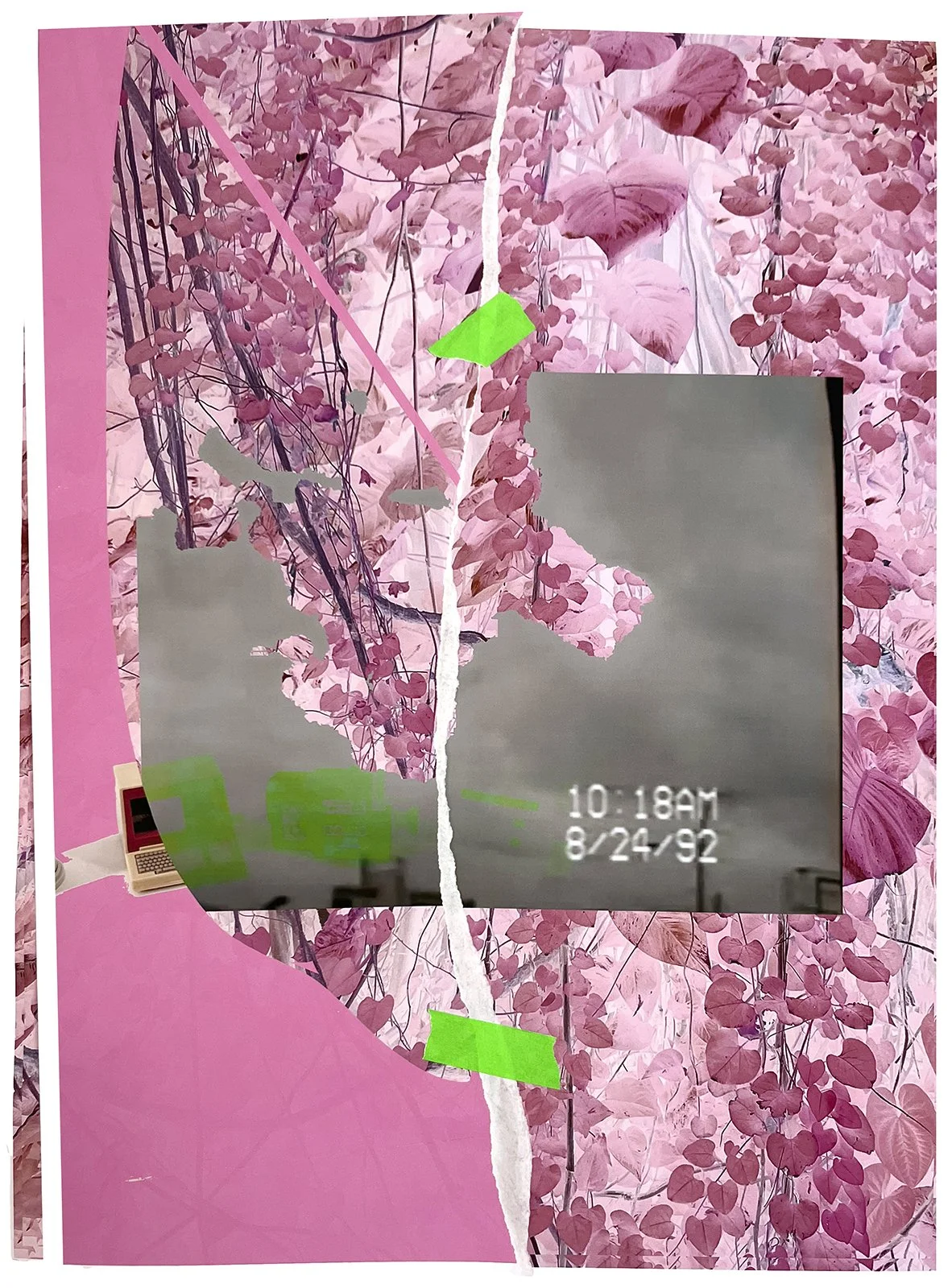
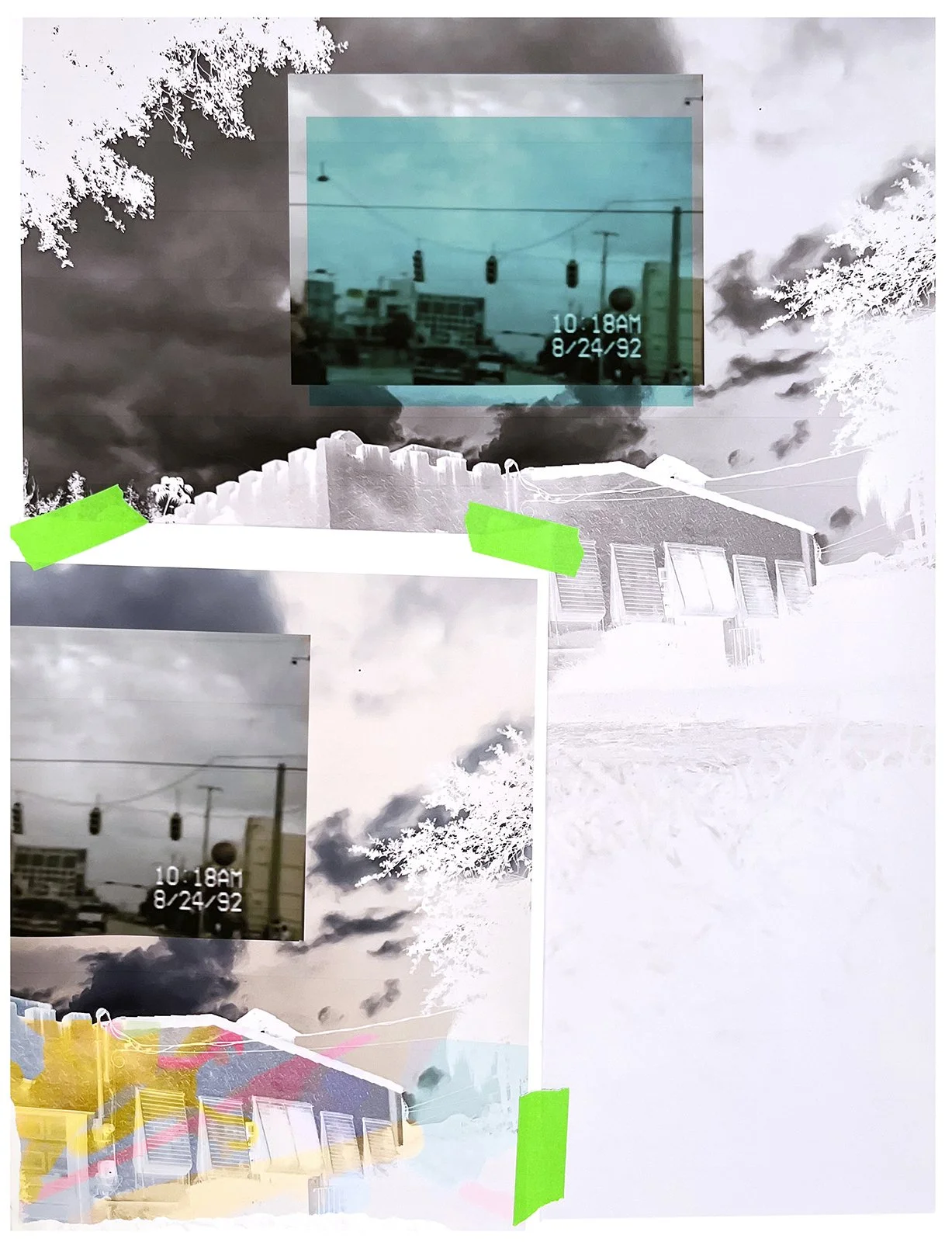
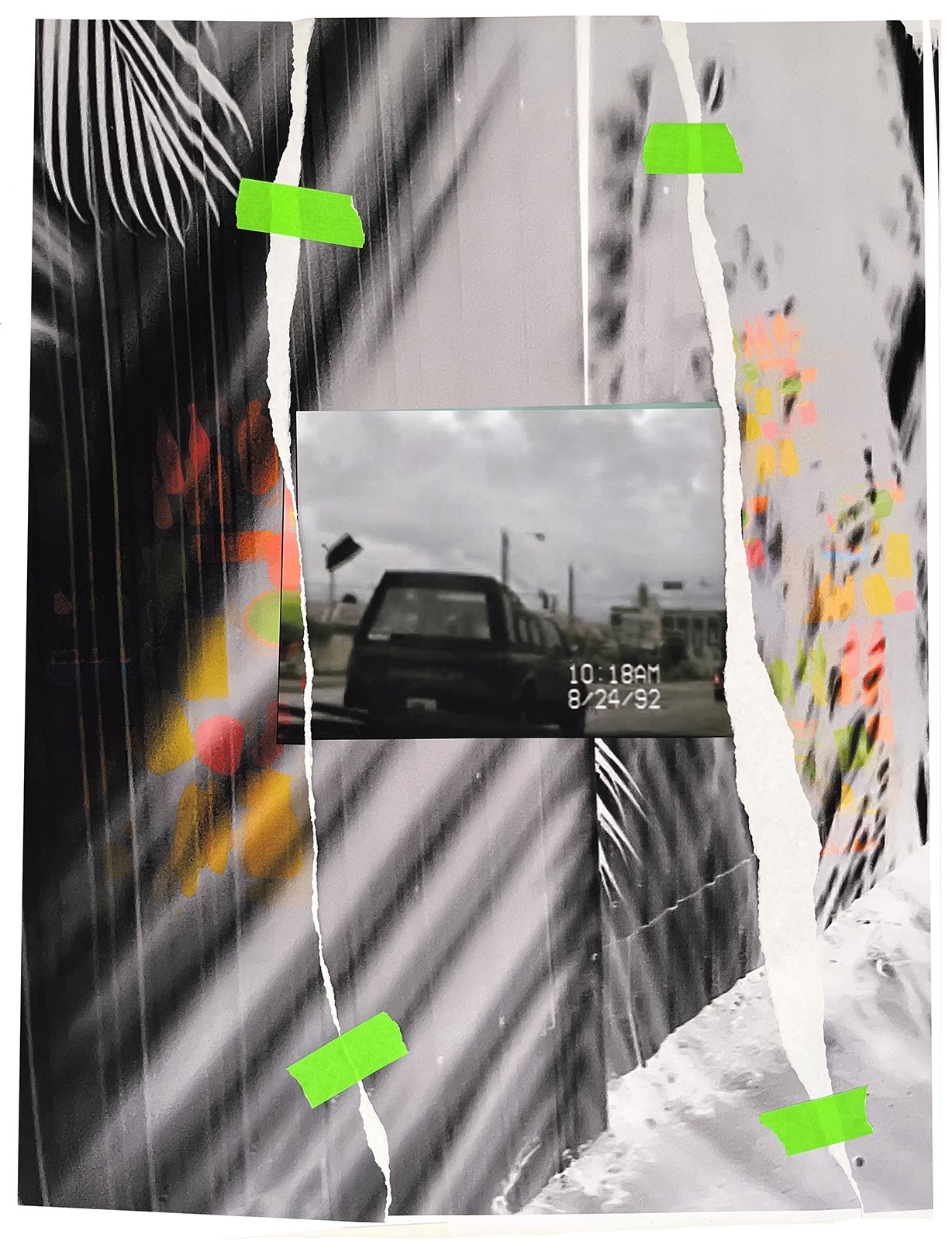
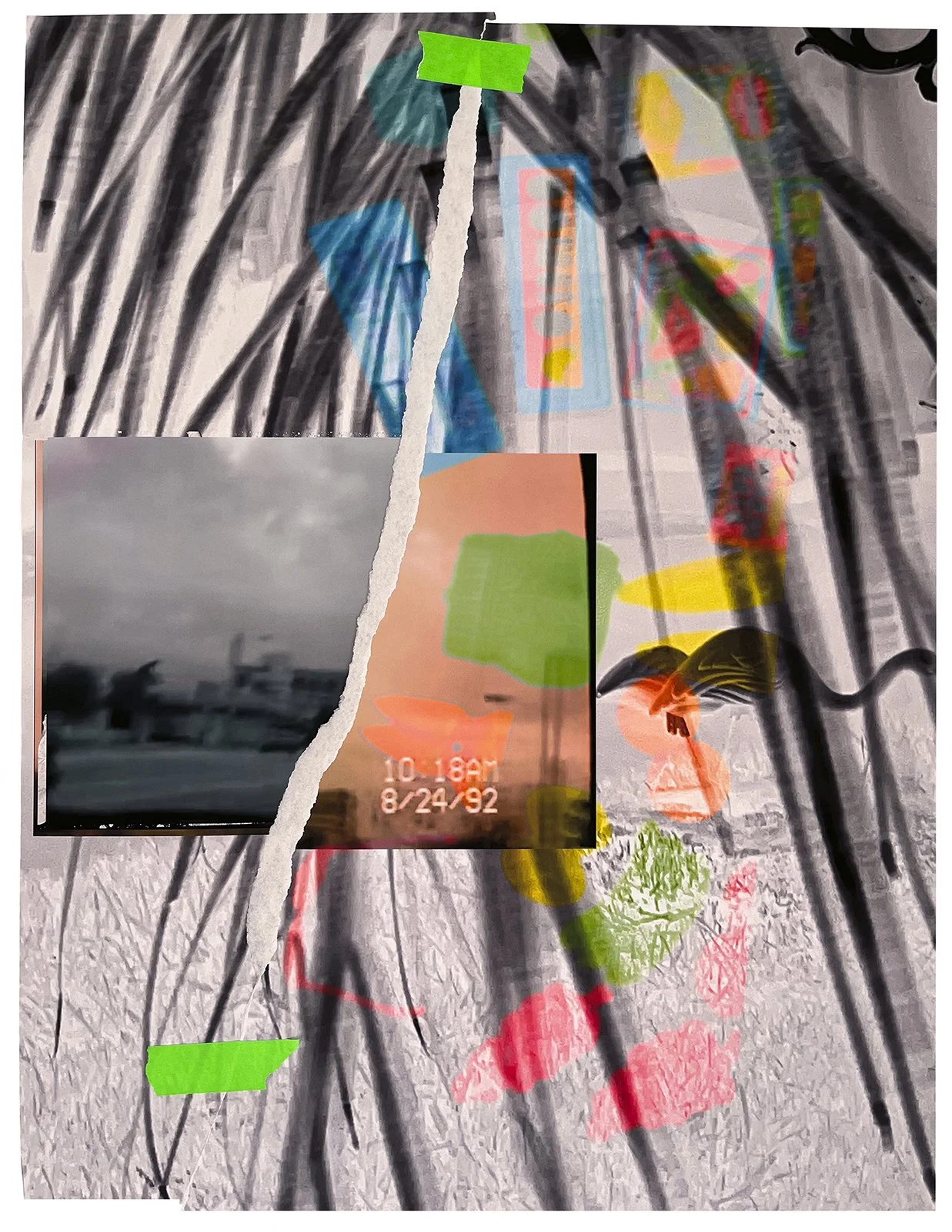
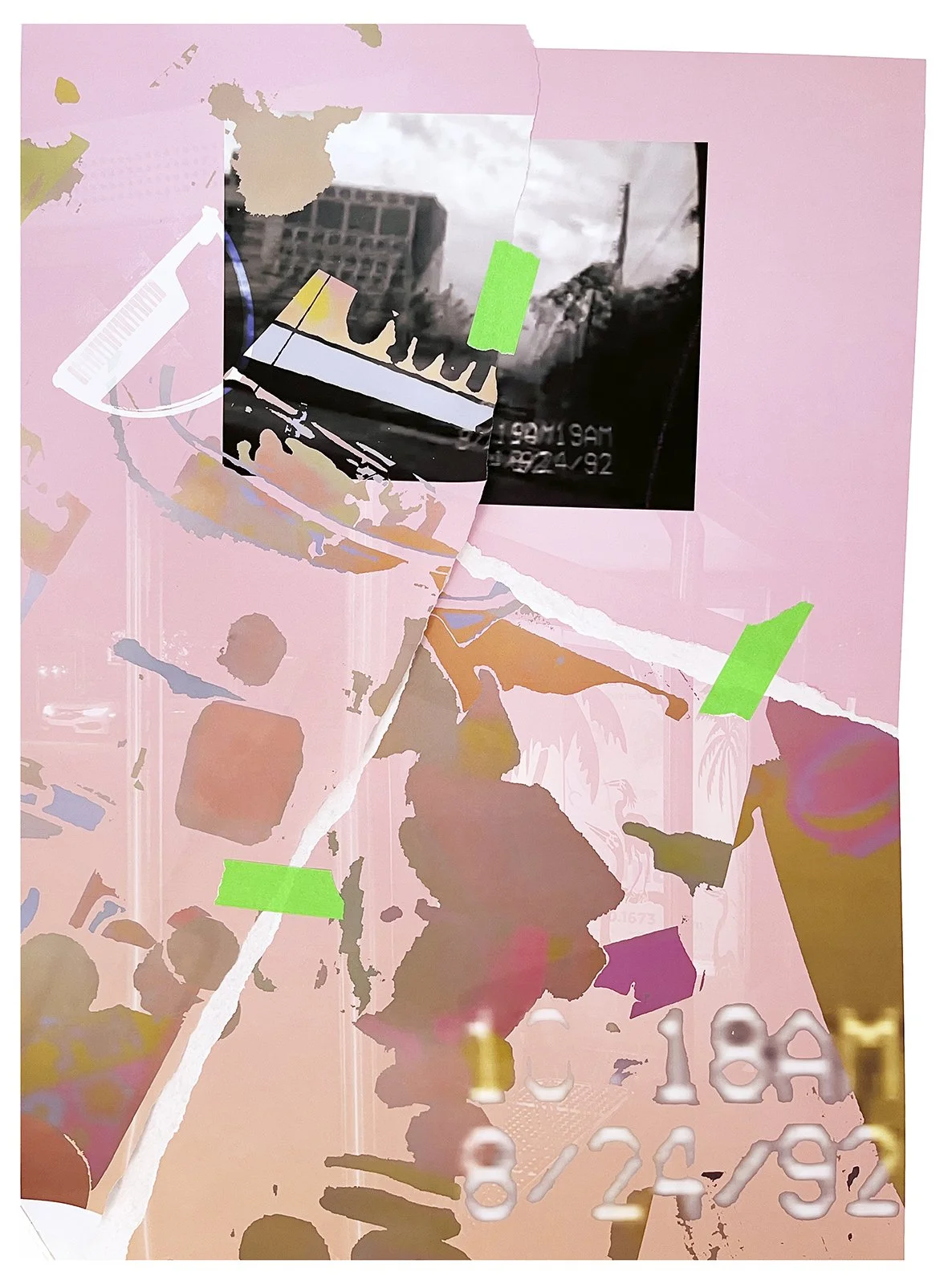
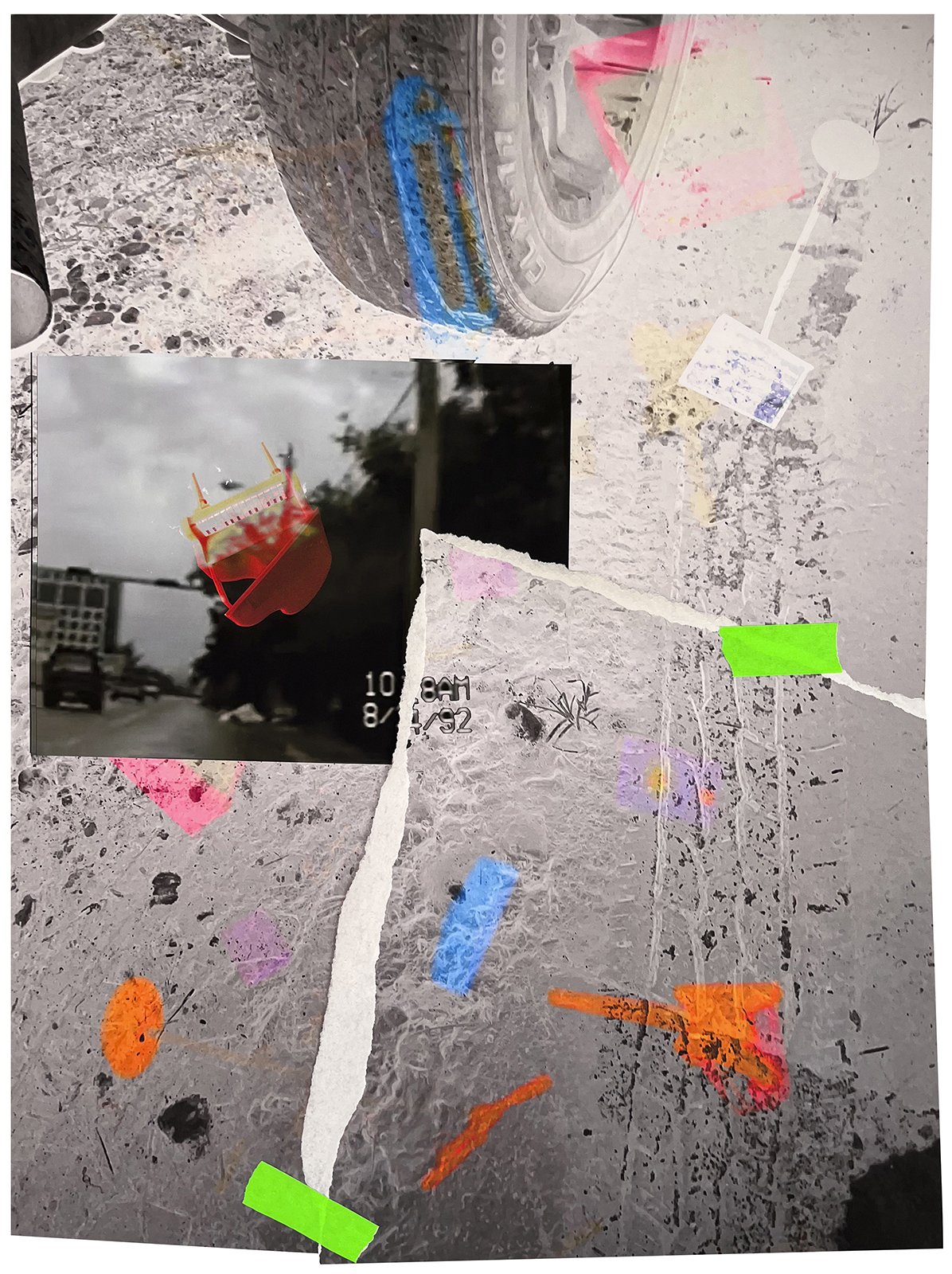
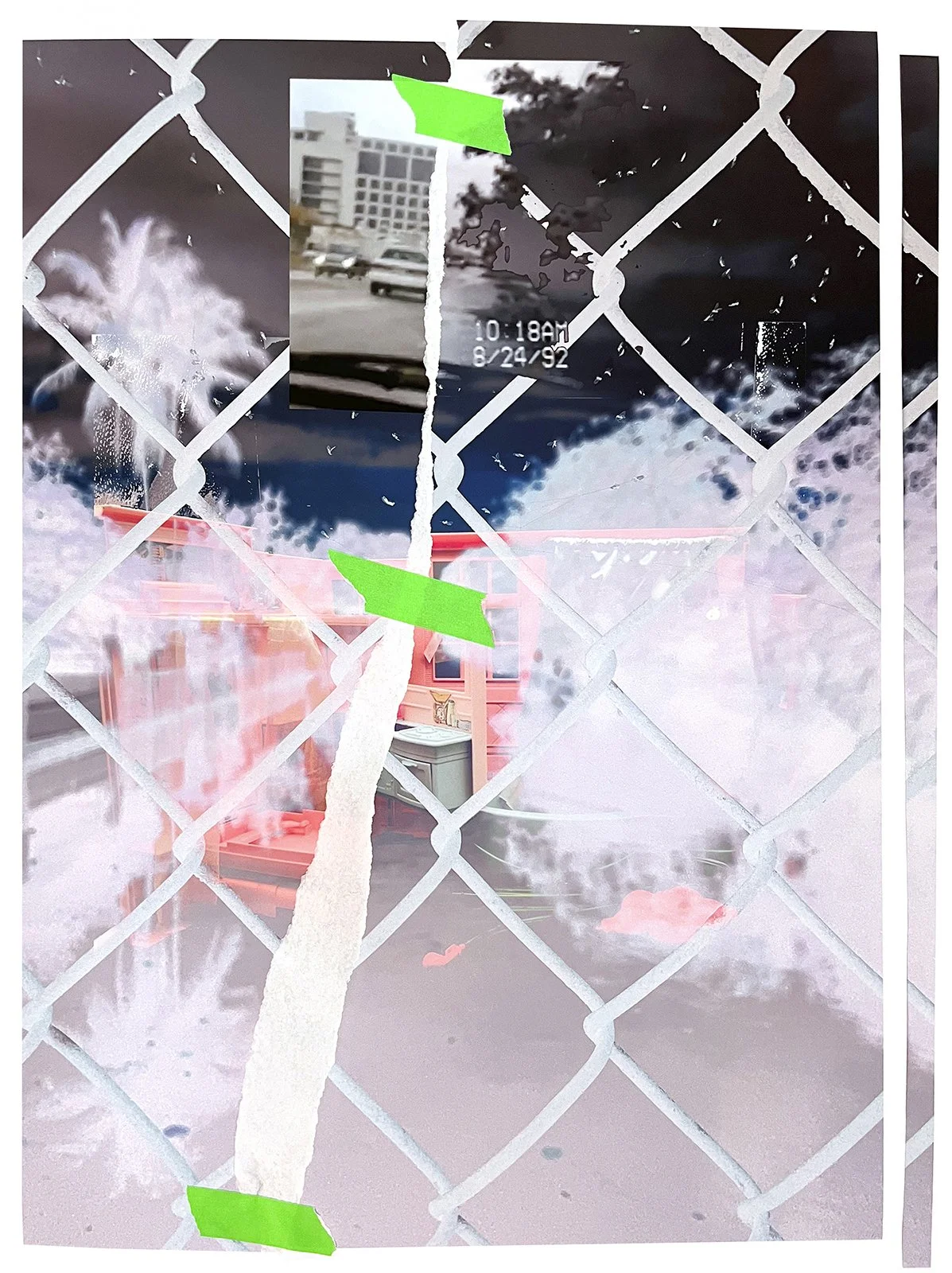
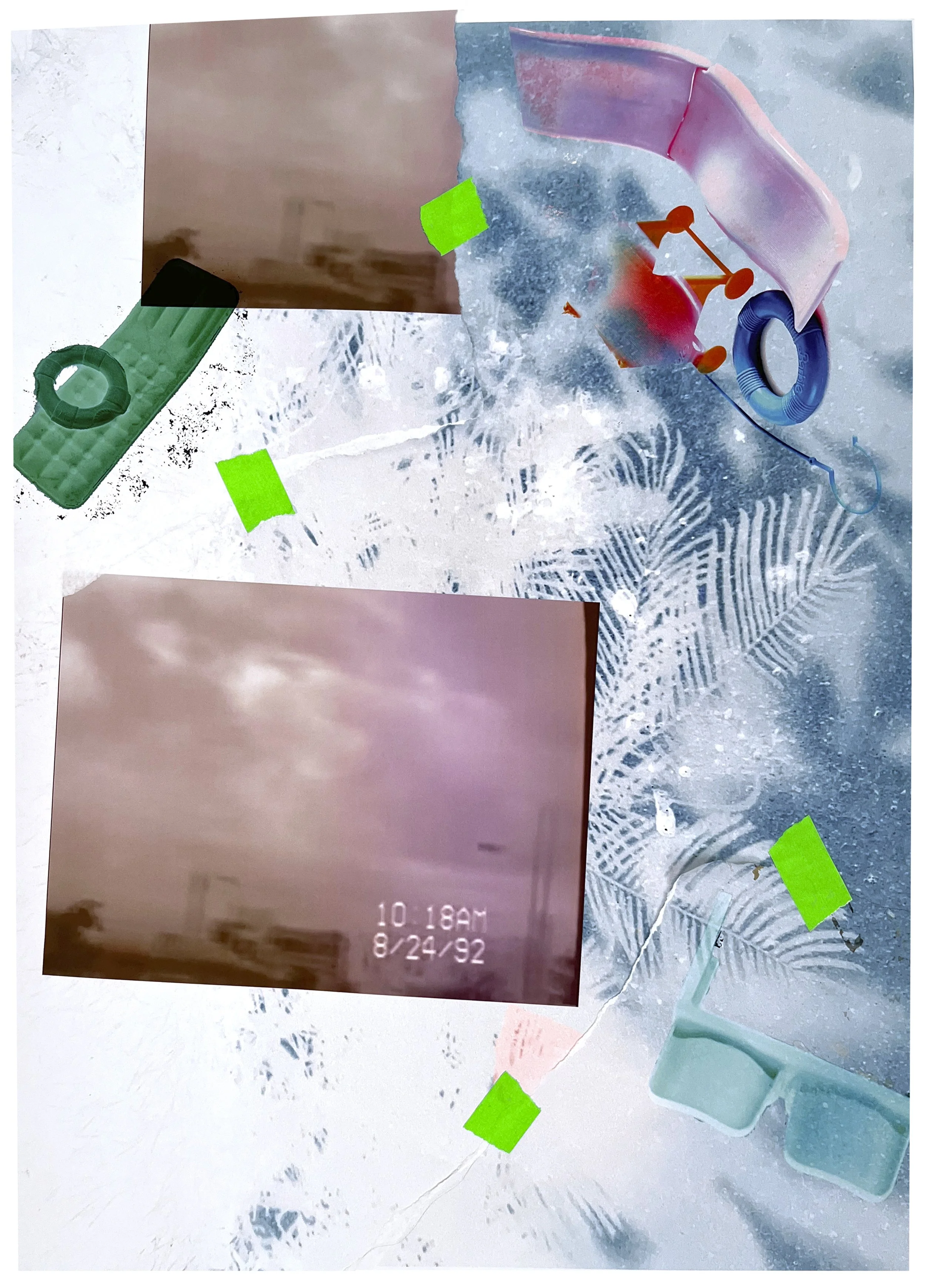
An anchor, a base, a mooring (2025-ongoing)
Archival pigment prints
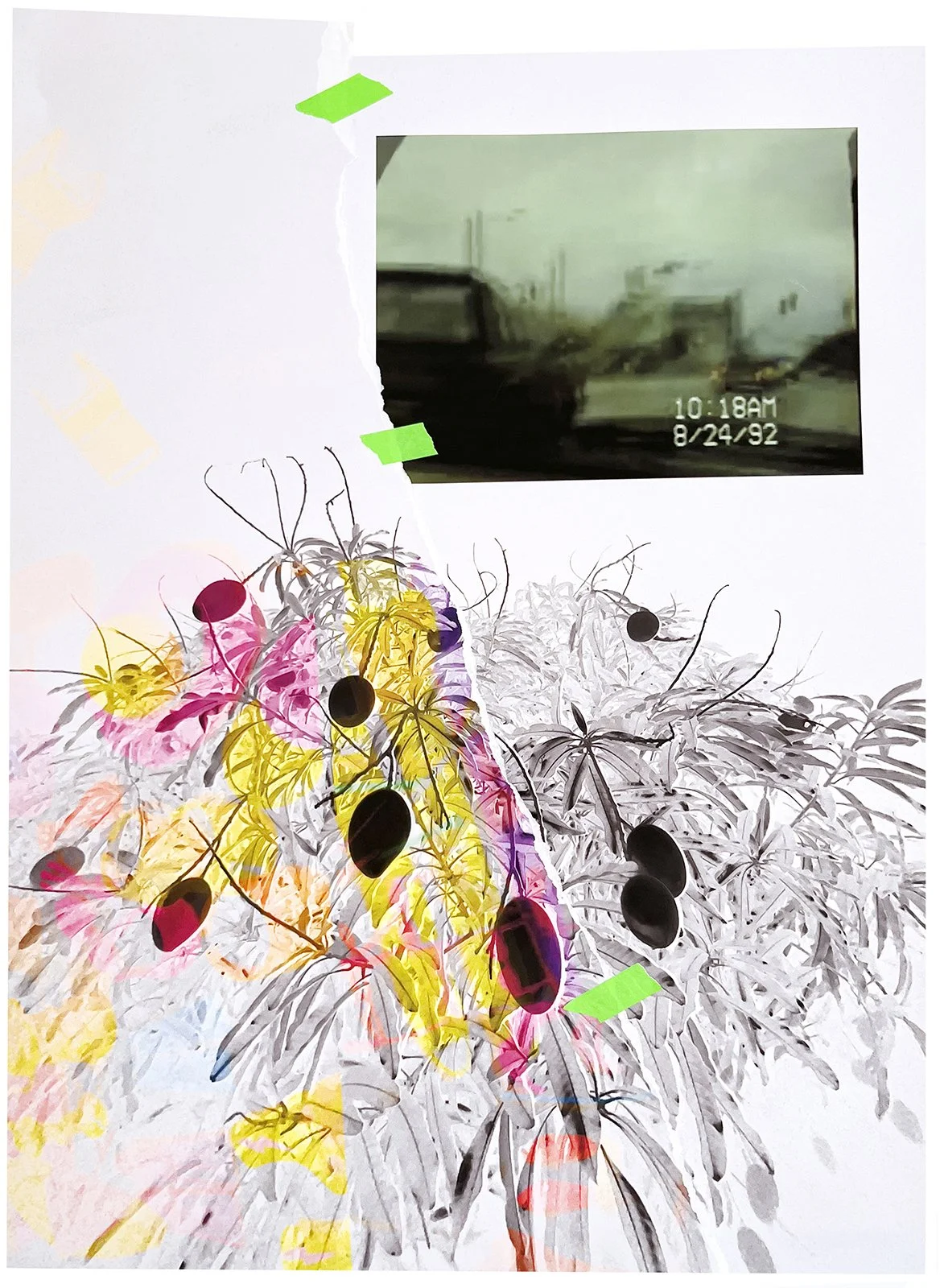
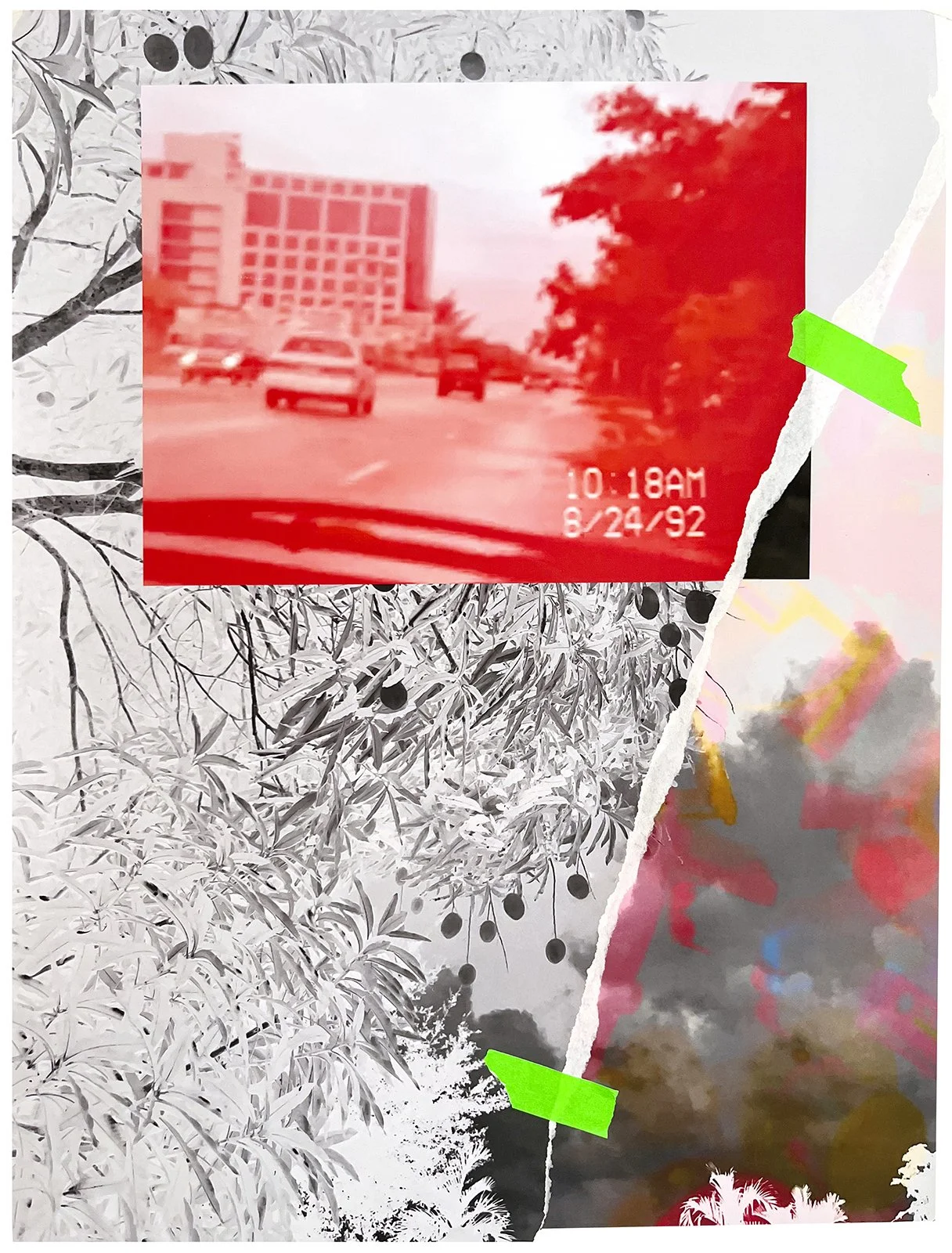
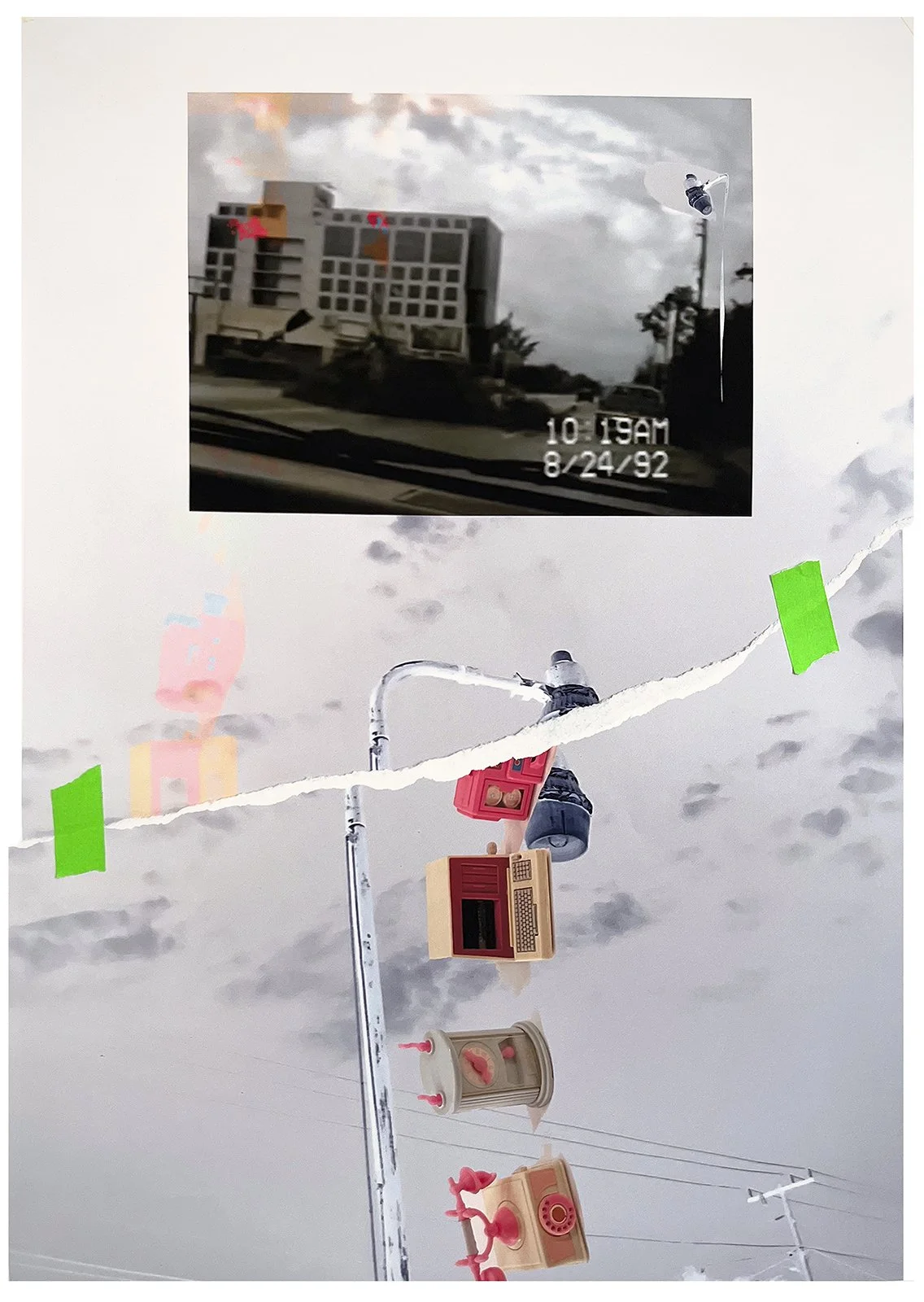
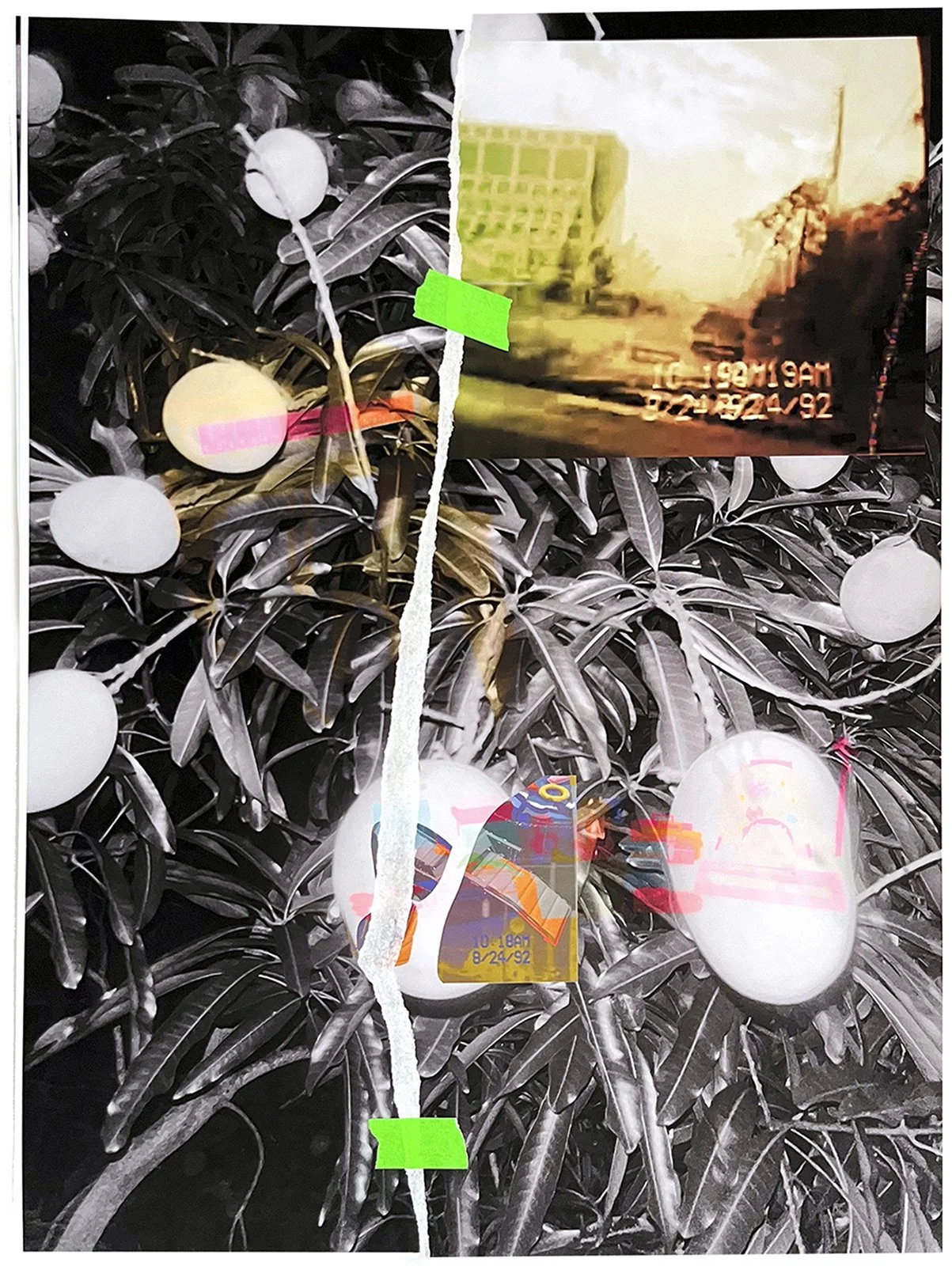
Time accumulates. This body of work “An anchor, a base, a mooring” begins from that premise: that 1992 is composed of the years before it, that Miami's current landscape is built on top of what Hurricane Andrew left behind, and that memory is never a clean slate.
The project draws from three sources: my own photographs, stills extracted from a digitized VHS labeled "CICLÓN,” four minutes of my father's footage of Andrew's aftermath that survived decades of being recorded over, and screenshots from eBay, where parts of the past are cobbled together. My eBay searches are specific: the hand-me-down 80s Barbie home and vacation accessories in the right colors and textures, ones that feel true to a moment, rather than a staged recreation of it. I lost my Barbie Dreamhouse to that storm when I was seven: a small-scale displacement that mirrored the larger patterns of loss experienced in Miami. My father filmed across town, a different experience of the same city, the same date burned into the timestamp. These three sources: my eye now, his documentation then, the market's version of before are treated equally in the process. Images are digitally collaged, printed, layered, torn, held together with gaffer tape, rephotographed and reprinted. The gaffer tape is visible. It comes from the world of film sets and temporary construction, strong enough to hold, clean enough to remove. The collages are adjustable, impermanent, assembled and reassembled. The rephotograph seals all of that evidence of making back into an image without resolving it.
The images are vertical, smartphone-scaled. They refuse the horizontal logic of the postcard, the consumable souvenir. Miami has spent thirty years rebuilding without preparation, the skyline rising while the water does. These images sit inside that accumulation of fracture and repair, but never quite the same or original.